
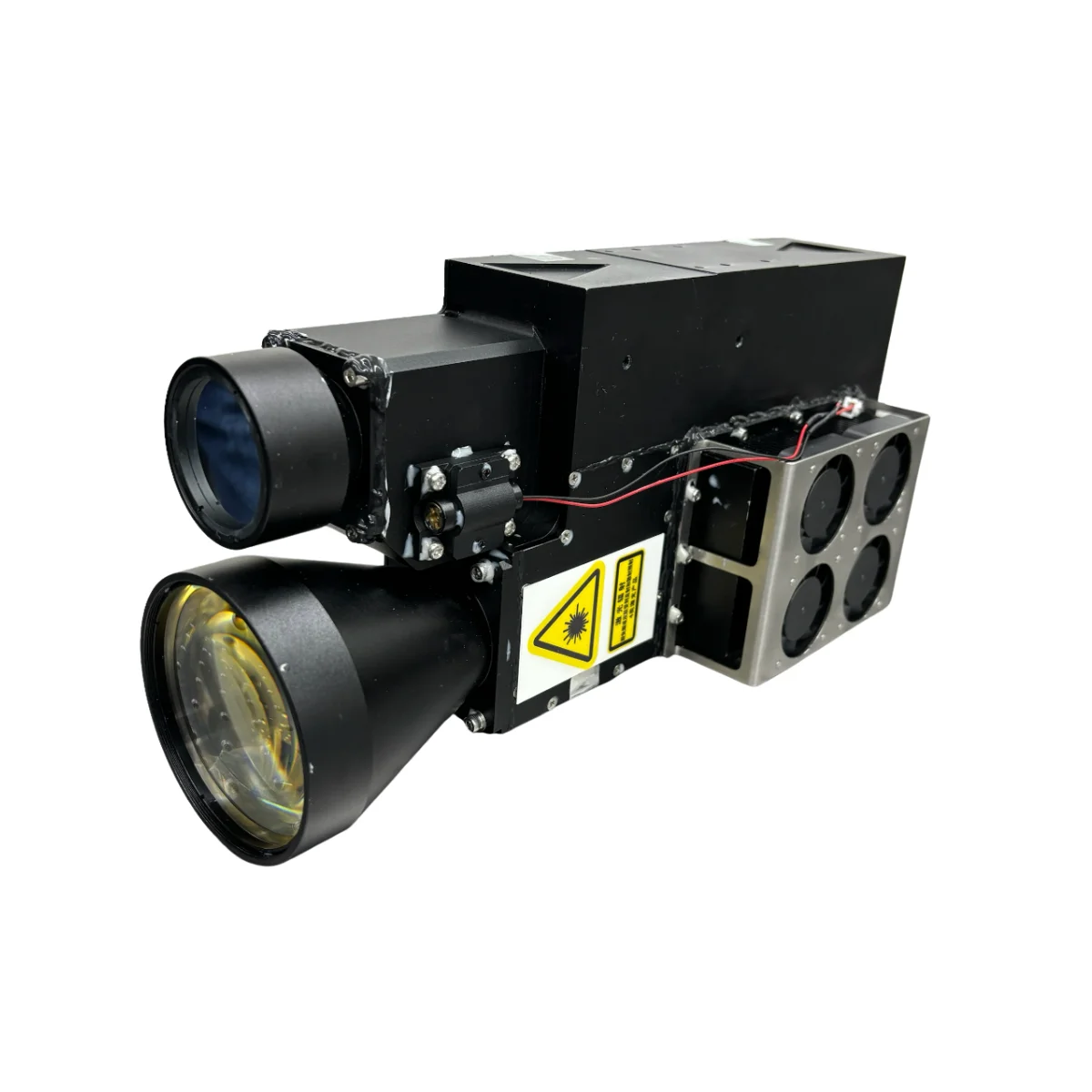
The laser target designator is the eye of the semi-active laser-guided munition. Its laser photoelectric detection capability and designation accuracy determine the hit probability of precision-guided munitions and is the "light source" of precision strike weapons.
The basic working link of a laser target designator system is as follows: the designator emits a coded laser to illuminate the atmosphere, which then illuminates the target remotely. The guided laser ballistic seeker receives the target echo, which is converted into a photoelectric signal by the detector and processed by photoelectric processing. The line-of-sight deviation is calculated to correct the missile's line vector. The photoelectric detection link is centered on a four-quadrant detector or an array detector. The energy distribution of the light spot is calculated to obtain the target's azimuth angle. The photoelectric link is the source of accuracy.
There are too many factors that reduce guidance accuracy, due to the coupling of multiple factors throughout the guidance process. At the transmitting end: excessive beam divergence angle, optical axis wobbling causing far-field spot drift, and insufficient coding power leading to low echo recognition rate; at the detecting end: detector dark current, channel gain mismatch, optical system aberrations, and assembly/adjustment eccentricity directly introduce angle calculation errors; environmental factors: atmospheric attenuation, wavefront distortion caused by turbulence, and stray sunlight significantly reduce the detection signal-to-noise ratio; additionally, different target reflectivities and platform stabilization lag will increase indication deviation.