
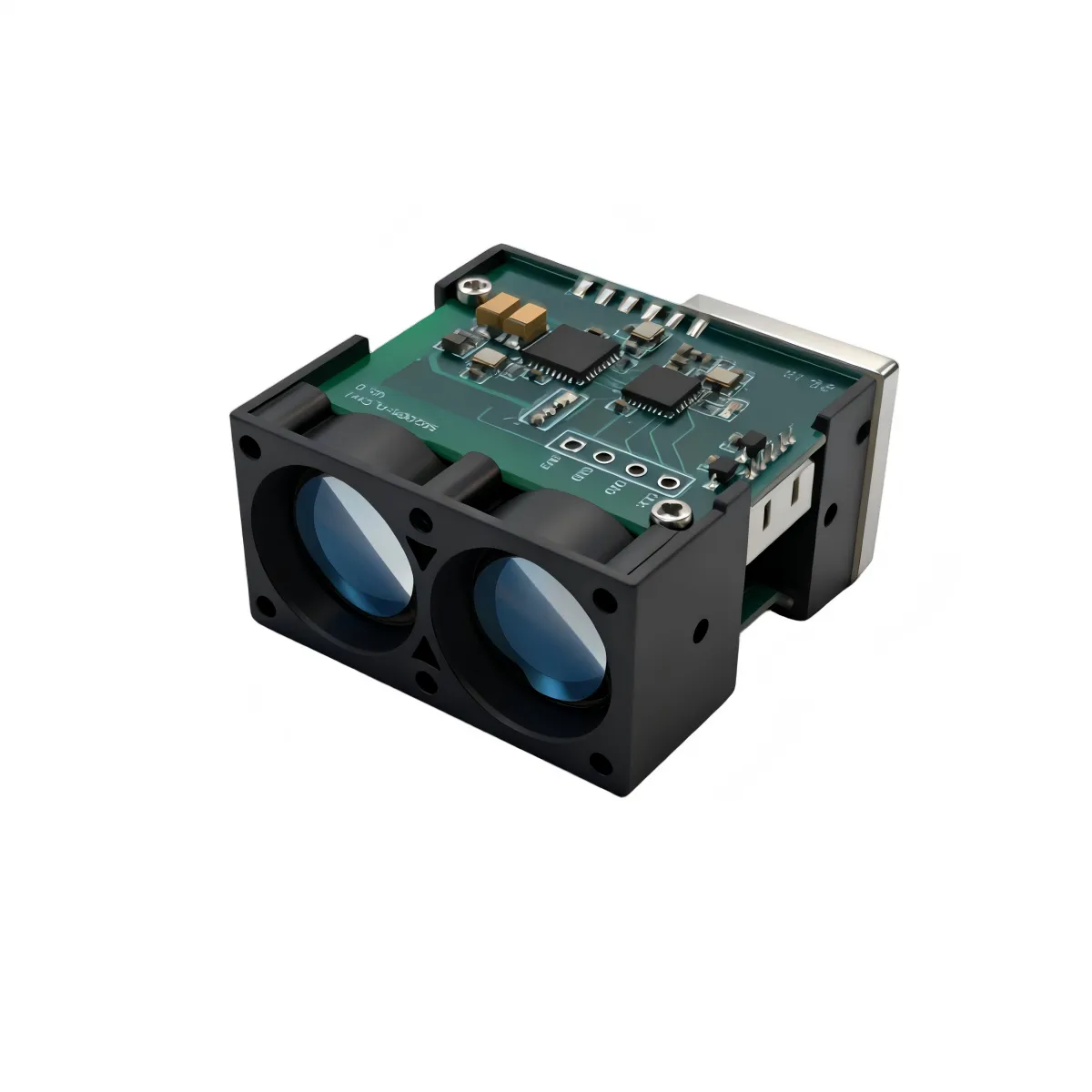
Laser ranging modules are core sensing components in the field of modern precision measurement. With their high-precision measurement characteristics, they have become a key component in intelligent devices, industrial inspection, outdoor surveying and mapping and other scenarios.
From the perspective of working mode, laser ranging modules are mainly divided into two categories: pulse type and phase type, to adapt to different measurement needs. Pulse type modules calculate the distance by emitting laser pulses and recording the time difference between pulse emission and reception. They have the characteristics of long range and fast response speed, making them suitable for medium and long distance measurement. They are widely used in outdoor surveying, UAV ranging and other scenarios.
Compared to traditional measurement methods, laser ranging modules offer significant advantages. Firstly, they provide high measurement accuracy, consistently outputting precise data to meet the stringent requirements of precision manufacturing and calibration. Secondly, they offer non-contact measurement, eliminating the need to contact the object being measured, thus avoiding damage to components and making them suitable for delicate, high-temperature, and long-distance applications. Thirdly, they offer fast response times, providing real-time measurement results to meet the dynamic needs of monitoring and real-time positioning. Fourthly, they are compact, highly integrated, and have a streamlined module structure, facilitating embedding in various products such as robots, portable devices, and smart terminals. Fifthly, they exhibit strong environmental adaptability and excellent anti-interference capabilities, enabling stable operation in industrial settings and complex outdoor environments.
As a fundamental component for precision measurement, laser ranging modules, with their mature operating modes and diverse advantages, have become an important support in the field of intelligent sensing. Their applications continue to expand in areas such as intelligent manufacturing, smart cities, and unmanned equipment, making them a core solution for achieving precise sensing and efficient detection.