
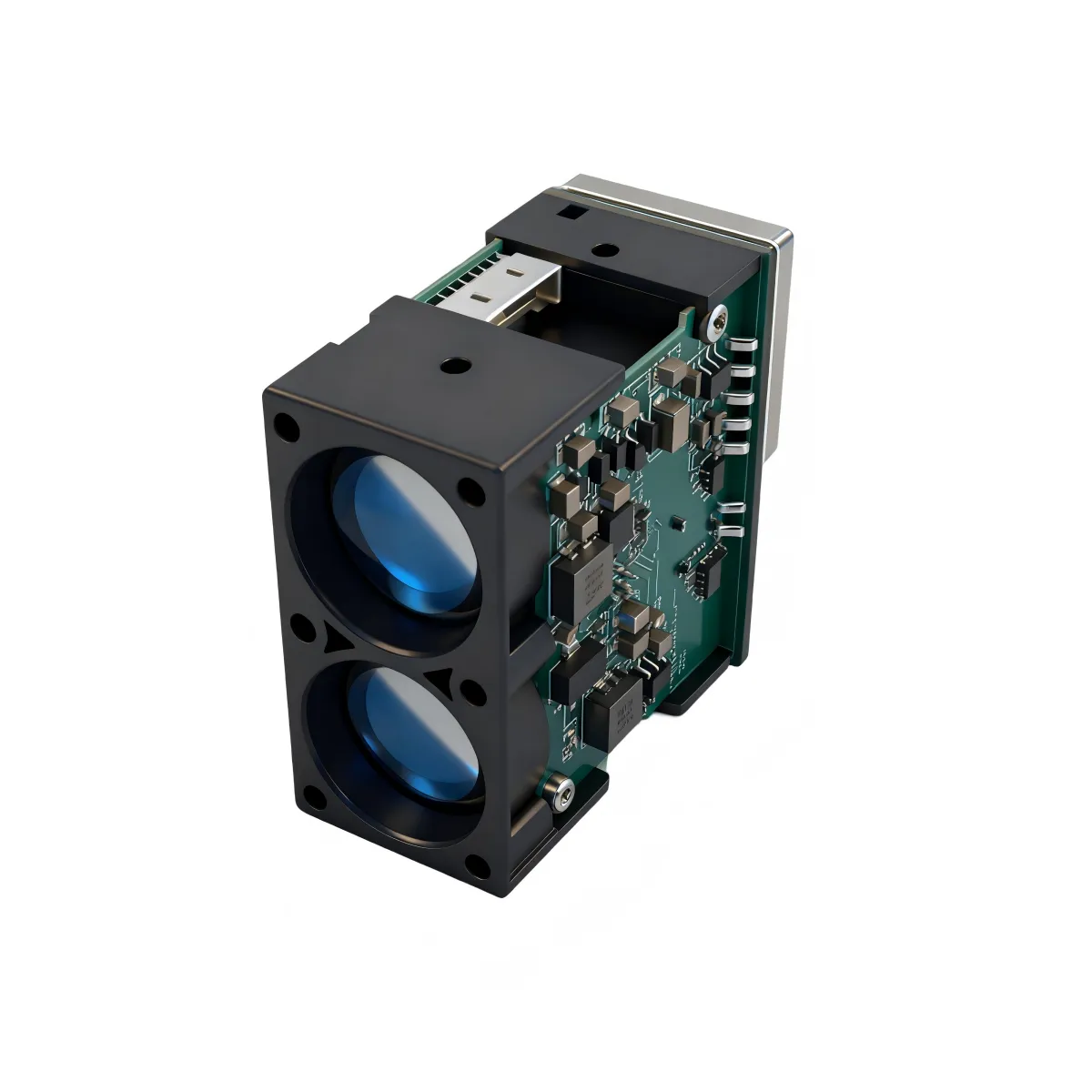
While the core logic for a laser ranging module selection is matching its performance capabilities as exactly as possible to the application scenario, it is not blind chasing high specifications.
First, define core performance indicators. Accuracy can dictate data validity. Mid-to-low-end modules have an error of ±2m to ±5m, which can support short-distance measurements; high-end modules have a wavelength of 1535nm and can constrain measurement accuracy within ±1m, suitable for ultra-high-accuracy measurement applications such as drone mapping. There is sufficient range redundancy. For indoor vacuum cleaners, the desired range of 10 metres or less, security patrols would only demand a range of over 1000 metres. A 1550 nm wavelength module will offer more benefit as it suffers lower attenuation in rain and fog.
Scenario characteristics impose additional requirements. Mobile devices are sensitive to power consumption. Low-power modules with down stand-by power consumption as low as 0.2W could increase the air-time of the drones. Durability is required for industry; better models can withstand a greater range of operating temperatures (i.e., down to −40°C, up to +60°C) and have vibration testing pass. Interface compatibility affects integration efficiency; handheld devices are compatible with lightweight TTL interfaces, while noisy environments require highly interference-resistant RS422 interfaces. Cost and practicality need to be balanced. For consumer-grade applications, a 635nm visible laser module is a good choice due to its low cost and ease of setup, but it has weak outdoor interference resistance. For industrial applications, 905nm or 1550nm infrared modules are preferred, although they are more expensive, they offer stronger environmental adaptability. Parameter redundancy must also be verified; for example, for outdoor use, a 30% margin should be reserved beyond the nominal range to cope with attenuation in severe weather.
Finally, thorough scenario testing is essential. Simulate the target environment for 24 hours and observe parameter drift. Combining this with manufacturer reputation and technical support will allow for a comprehensive assessment and selection of the most suitable laser ranging module.