
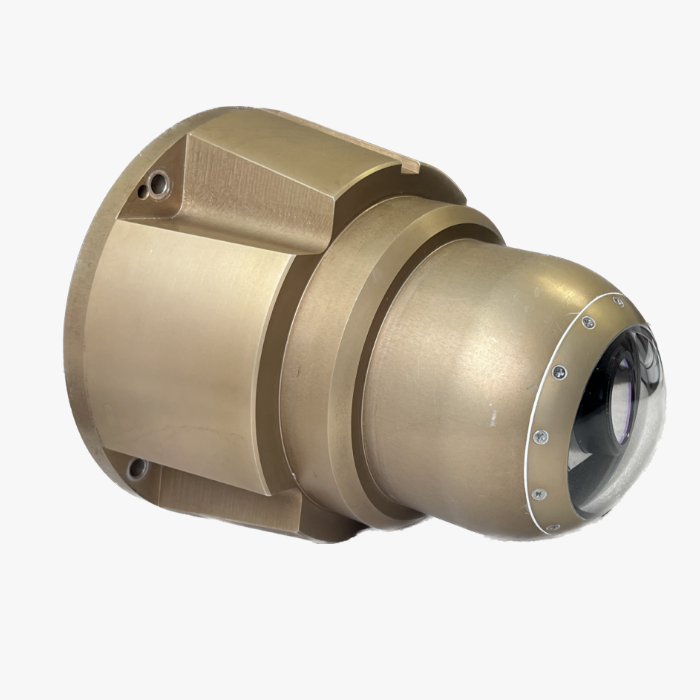
As the core component of precision-guided weapons, the performance of the laser seeker directly determines the hit accuracy and combat effectiveness of the weapon system.
Technical Architecture
The laser seeker adopts a "detection-processing-control" three-in-one modular architecture. Each module is independently packaged and the interface is standardized. It can be flexibly adapted according to the size and weight restrictions of different weapon platforms (missiles, artillery shells, drones, etc.).
Application scenario adaptation solution
Anti-tank missile adaptation
For vehicle-mounted/aircraft-mounted anti-tank missiles, the seeker has a rapid response capability: target acquisition time ≤ 0.5 seconds, and the "dive attack" mode is activated at the end of the missile flight (within 1km of the target), guiding the missile to hit the target's top armor at a 45° angle (traditional guidance mostly attacks the frontal armor), increasing the armor-piercing effectiveness by 30%.
Precision-guided artillery shells
When adapting to guided artillery shells fired by 155mm howitzers, a trajectory correction module is added: by receiving the GPS position information of the shell itself, the tracking coordinate system of the seeker is adjusted in real time to offset the wind deviation and trajectory deviation of the shell during flight, so that the accuracy of CEP ≤ 3 meters can be maintained when the range reaches 50km.
UAV-borne guided bomb adaptation
The UAV's load limit provides a lightweight and simplified version (weight ≤ 2kg), deletes some redundant functions, retains the core laser semi-active guidance and infrared assisted recognition capabilities, and can be used in conjunction with ground laser illuminators to achieve "detection and destruction", which is particularly suitable for low-intensity combat scenarios such as counter-terrorism and border patrols.