
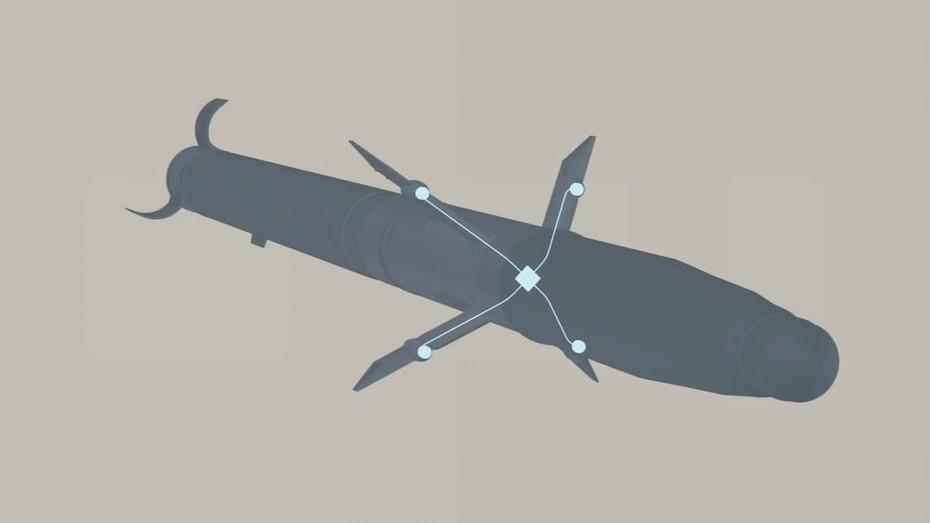
In the field of precision-guided weapons, laser seekers are a dazzling star, playing a key role in modern warfare with their unique advantages. They act like the "precision eye" of a missile, enabling the weapon to precisely strike its target.
A laser seeker typically consists of a laser illuminator, a receiver, an information processor, and a servo system. Its operating principle is based on the target's laser reflection characteristics. Point-source laser seekers treat the target as a point light source and track it by detecting the center of the reflected laser's intensity. These guidance methods are suitable for long-range and small targets, but their accuracy is easily affected by large targets or interference. Imaging laser seekers (lidar seekers) use lidar to create a three-dimensional image of the target, capturing detailed information such as its shape and outline. These seekers can accurately identify the target and target its vital areas for attack. They also offer exceptional anti-interference and target recognition capabilities, representing the future of high-precision guidance.
Laser seekers have significant advantages. They offer extremely high guidance accuracy, reaching meter-level accuracy or even higher, effectively engaging various point targets and excelling in anti-tank and precision ground attack missions. Lasers have strong resistance to electromagnetic interference and can operate stably in complex electromagnetic environments, making them less susceptible to enemy electronic jamming. They also offer excellent confidentiality, with a narrow laser beam and excellent directionality, making them difficult to detect and intercept. However, they also have certain limitations. They are significantly affected by weather conditions. In adverse weather conditions such as rain, fog, and dust, laser transmission is attenuated, reducing both range and accuracy.
To overcome these limitations, multi-mode composite seekers are becoming a trend. Combining laser guidance with other guidance methods such as infrared and radar, such as radar-laser composite seekers, can use radar to search for targets at long range and switch to laser guidance for precise strikes upon approach. This leverages the advantages of each guidance method and enhances the weapon's combat effectiveness in complex environments.
In today's international landscape, with ongoing local conflicts, the demand for precision-guided weapons continues to grow. As a key component, laser seekers offer a promising market prospect. Countries are increasing their R&D investment, promoting continuous technological innovation, and striving to seize the initiative in future wars.