1535nm Laser Ranging Module 12km LRF1221C
Need pricing or a tailored specification? Tell us your application — wavelength, range, platform and interface — and our engineers will reply within 24 hours with a proposal.
DESCRIPTION
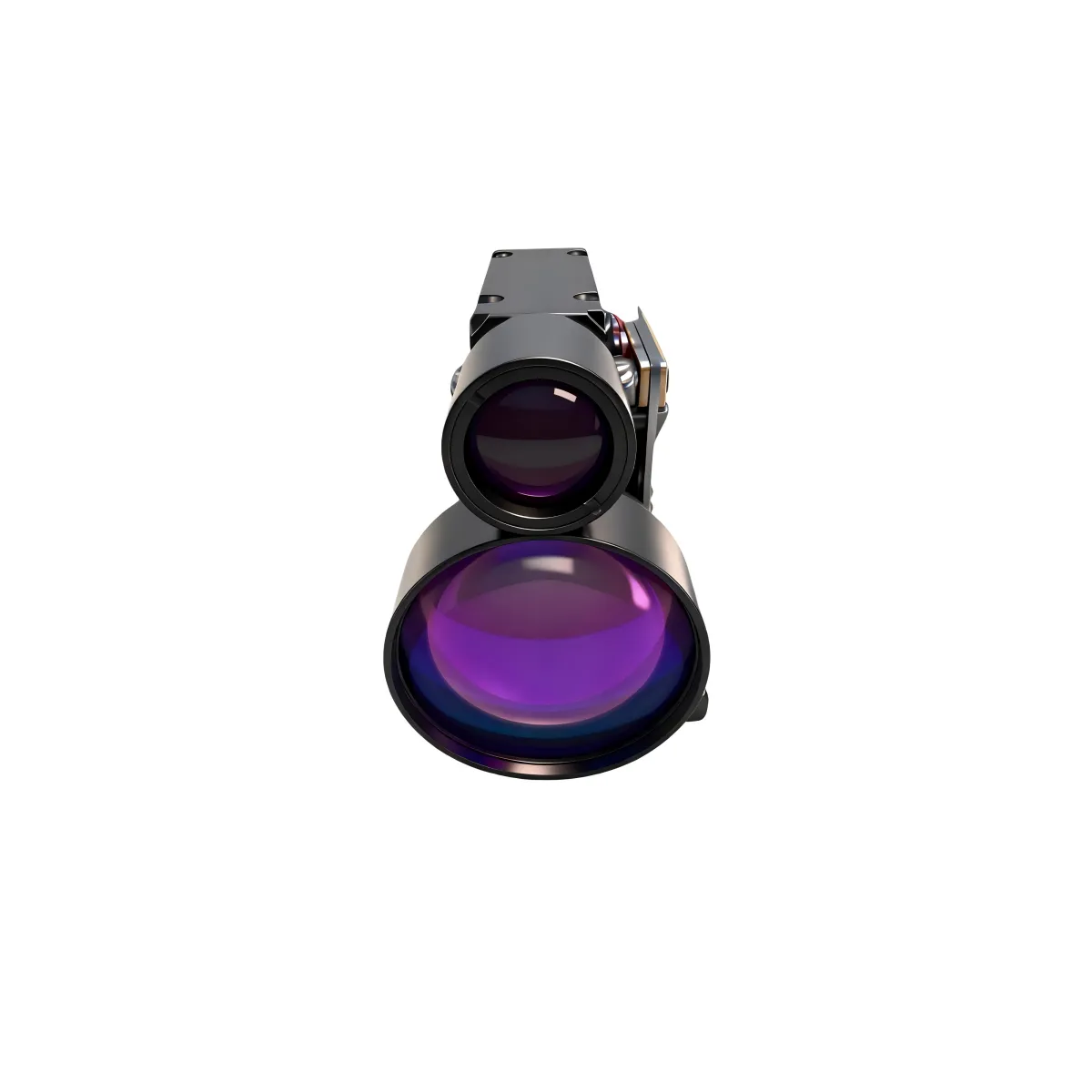
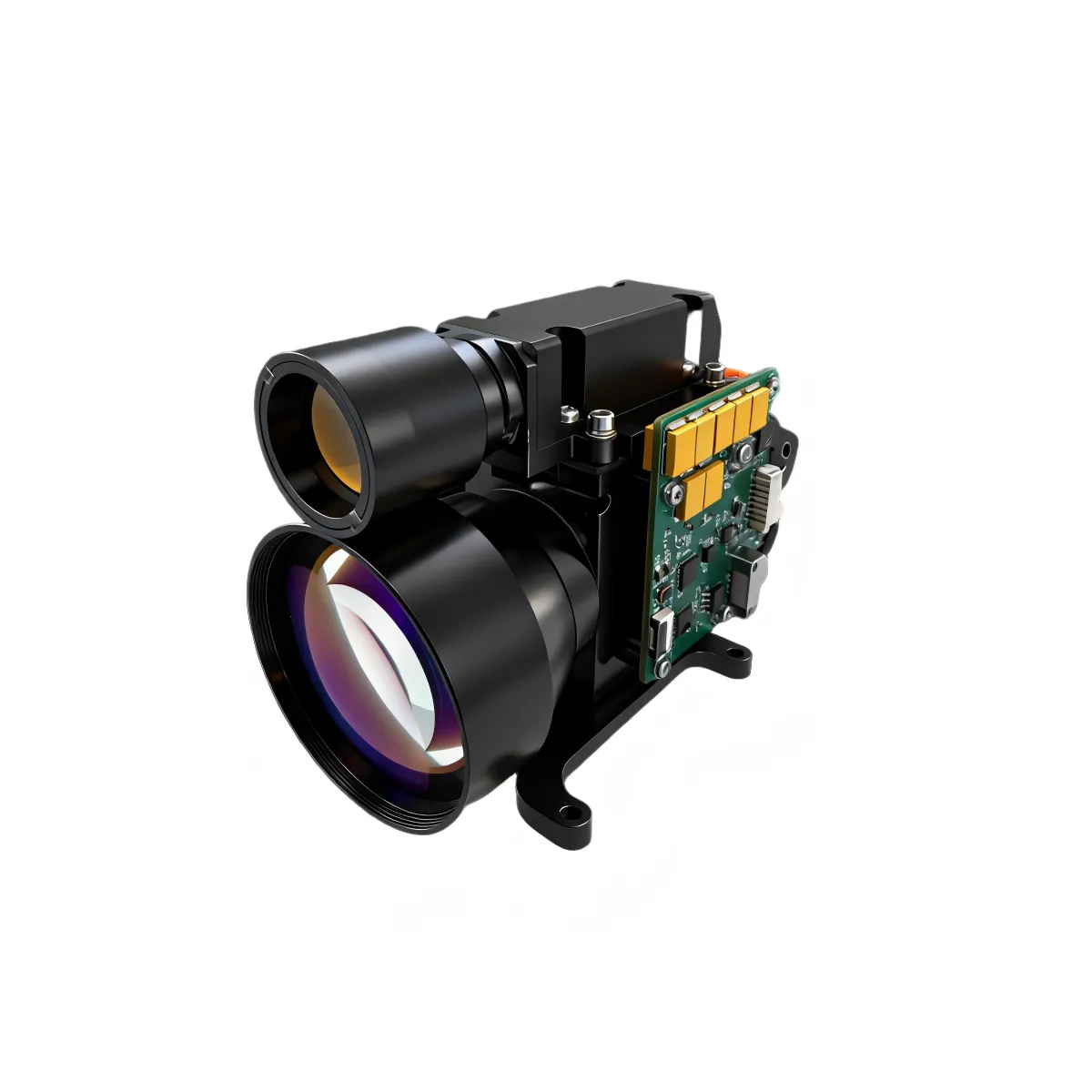
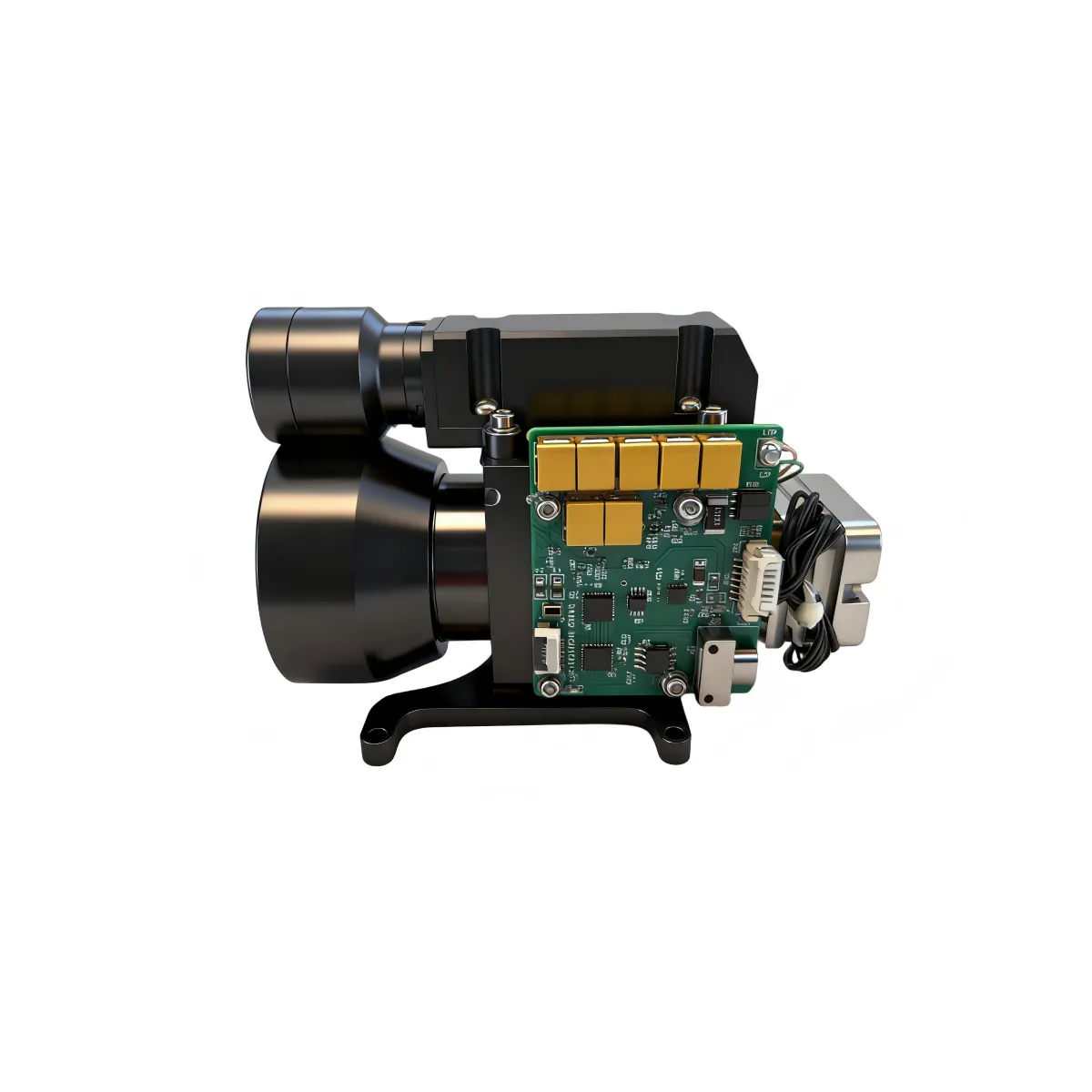
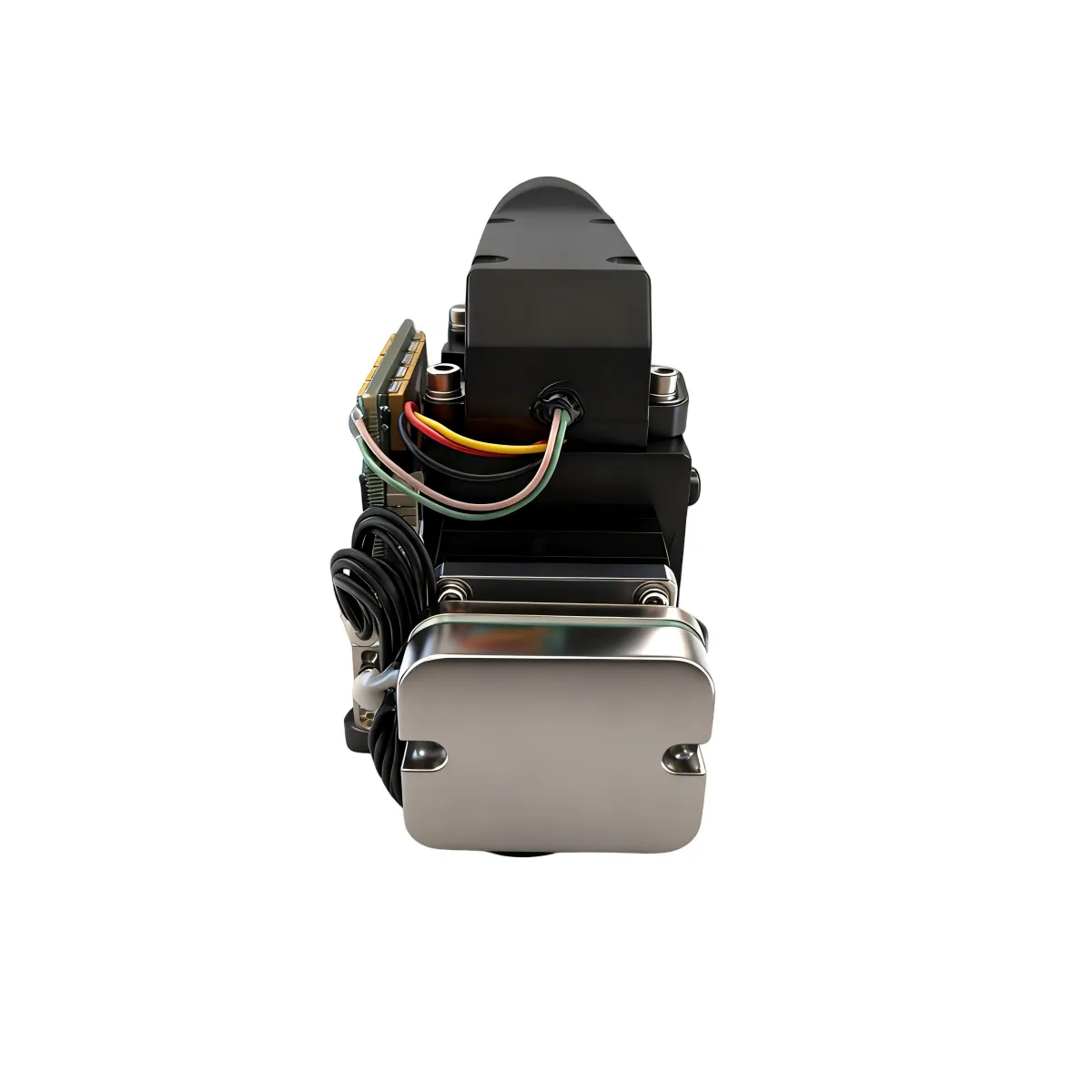
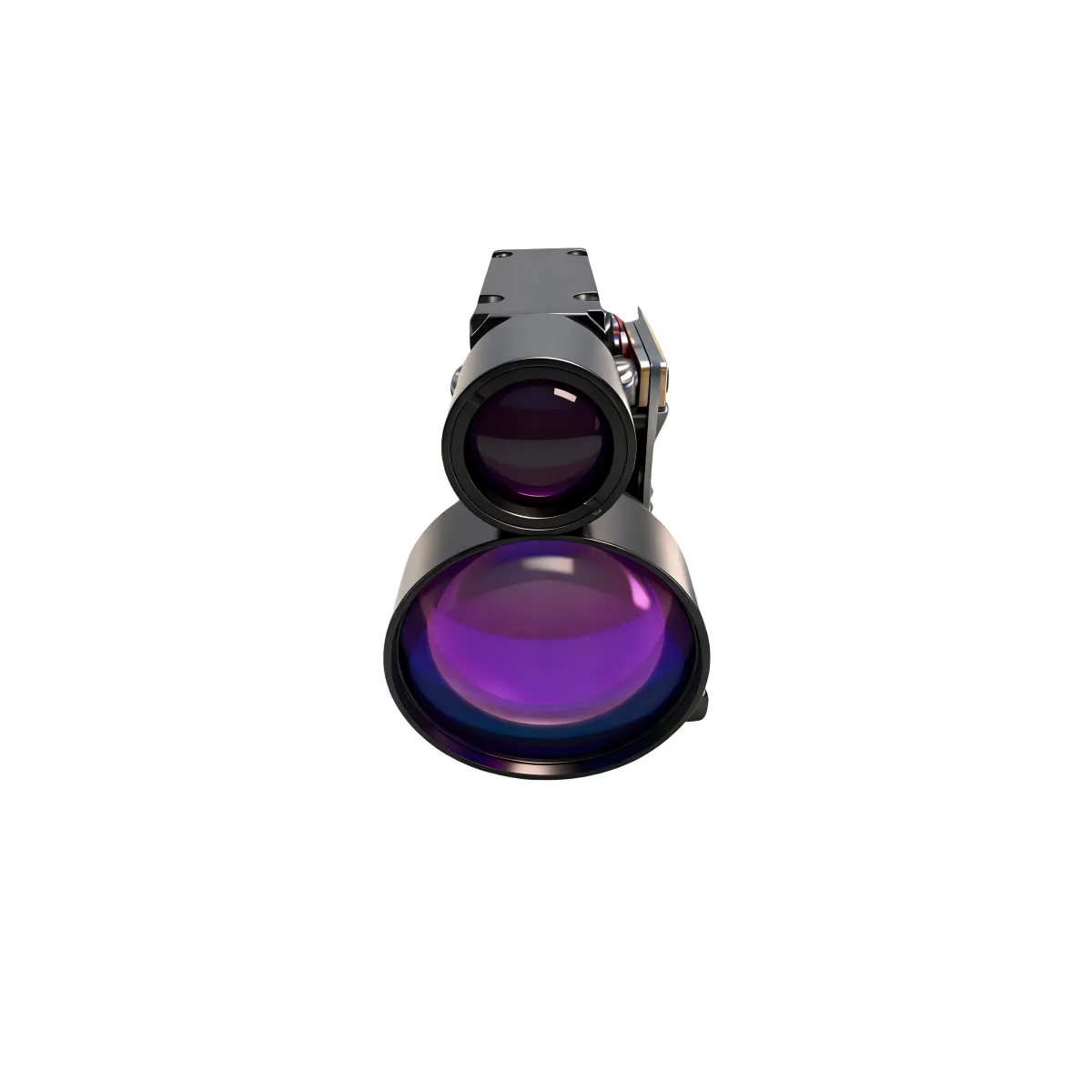
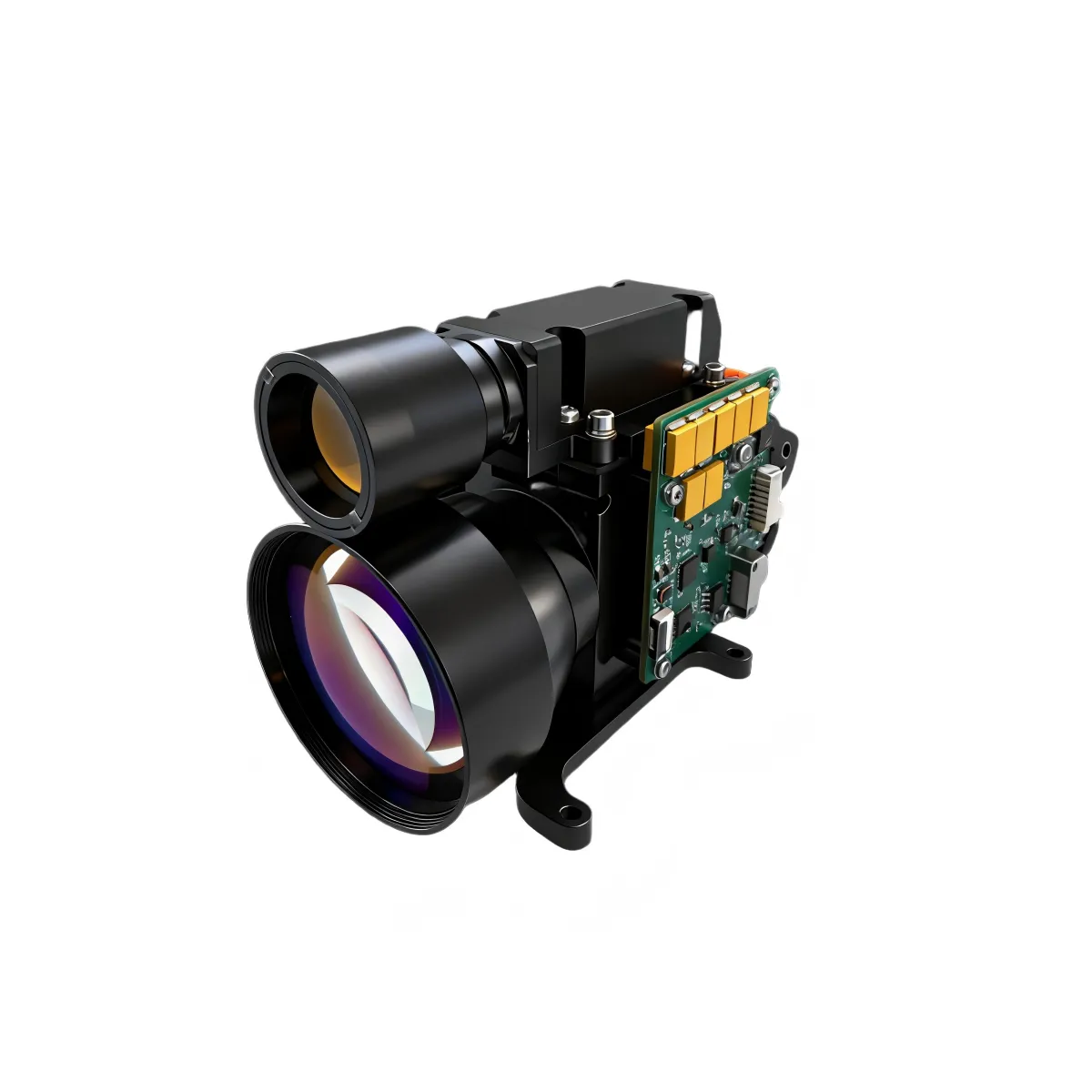
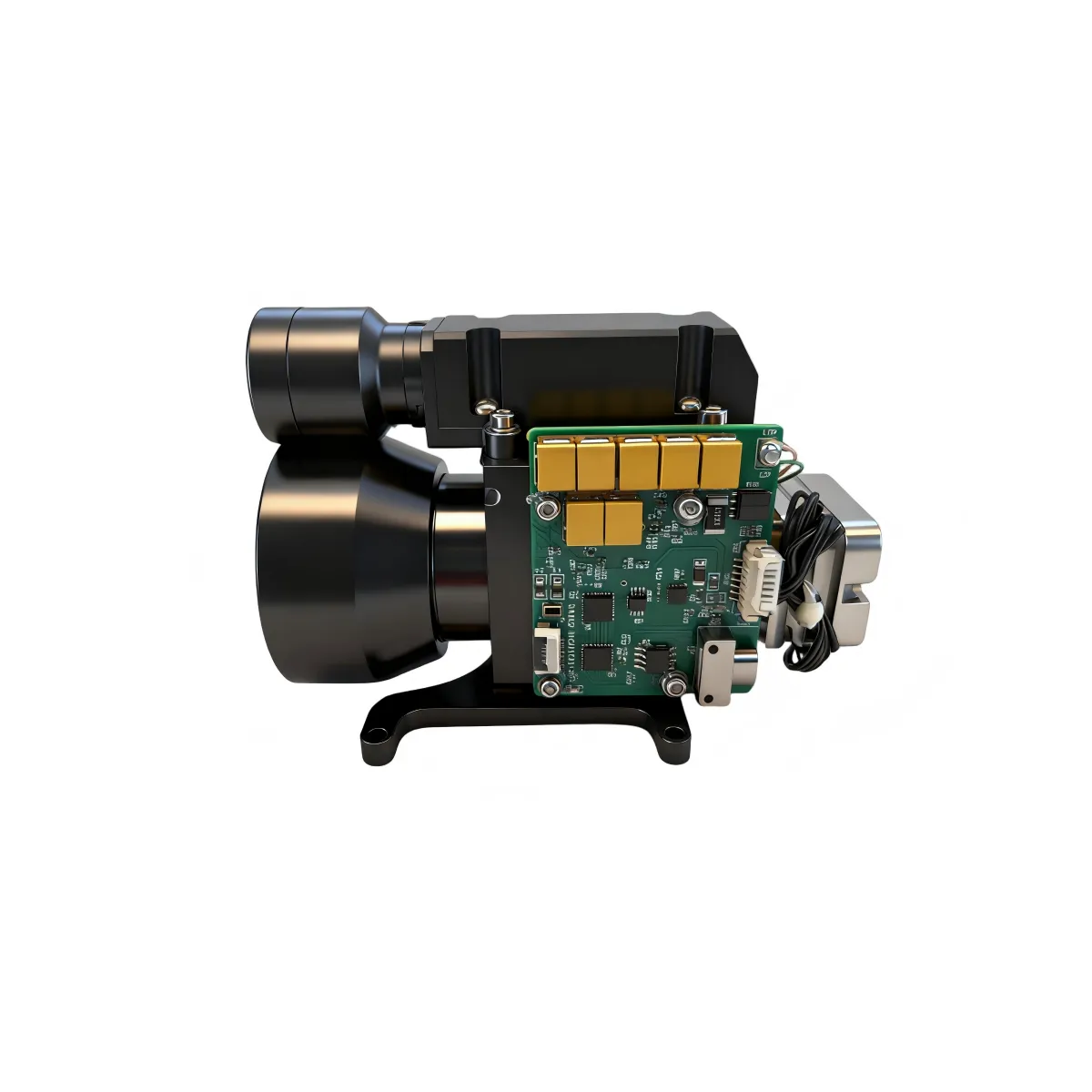
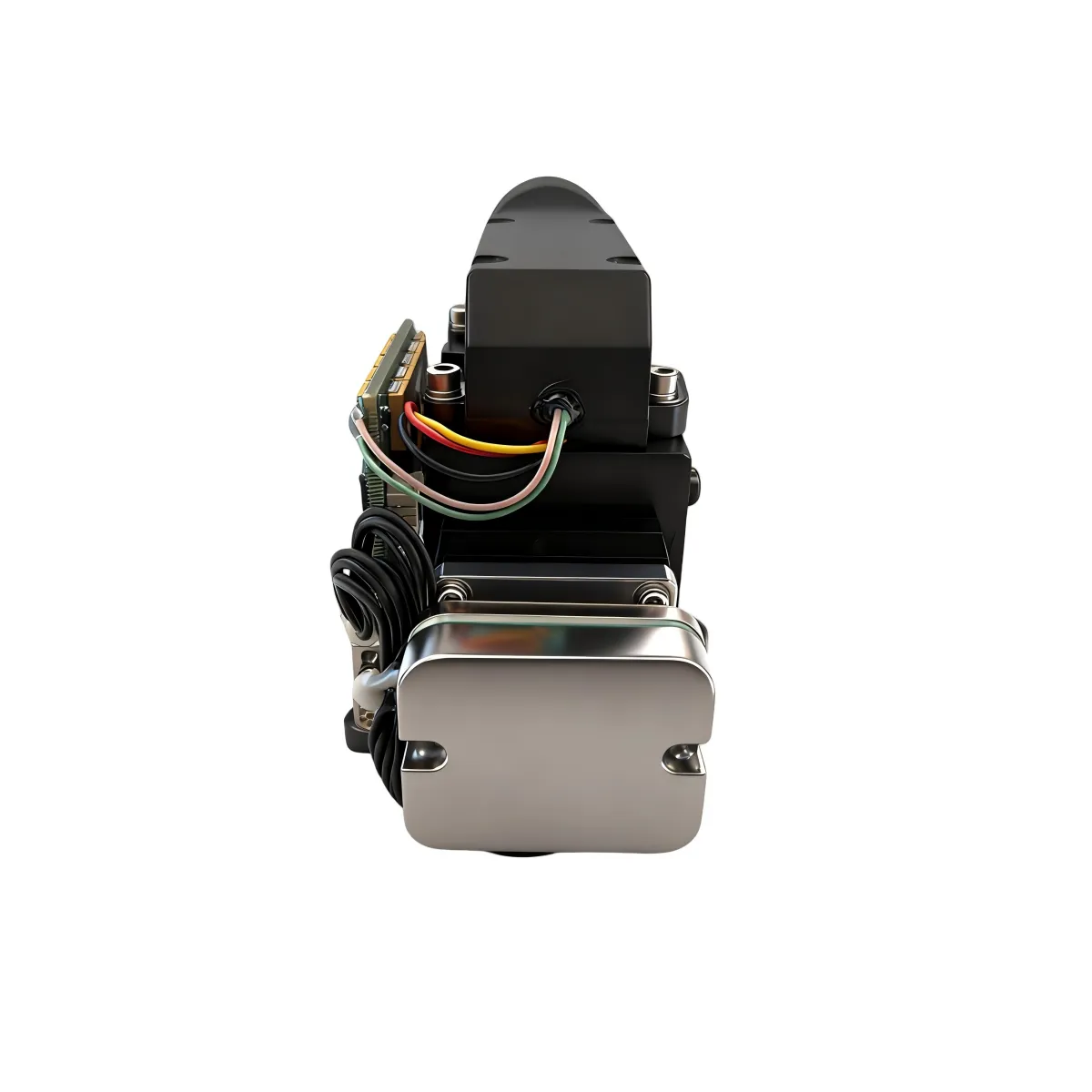
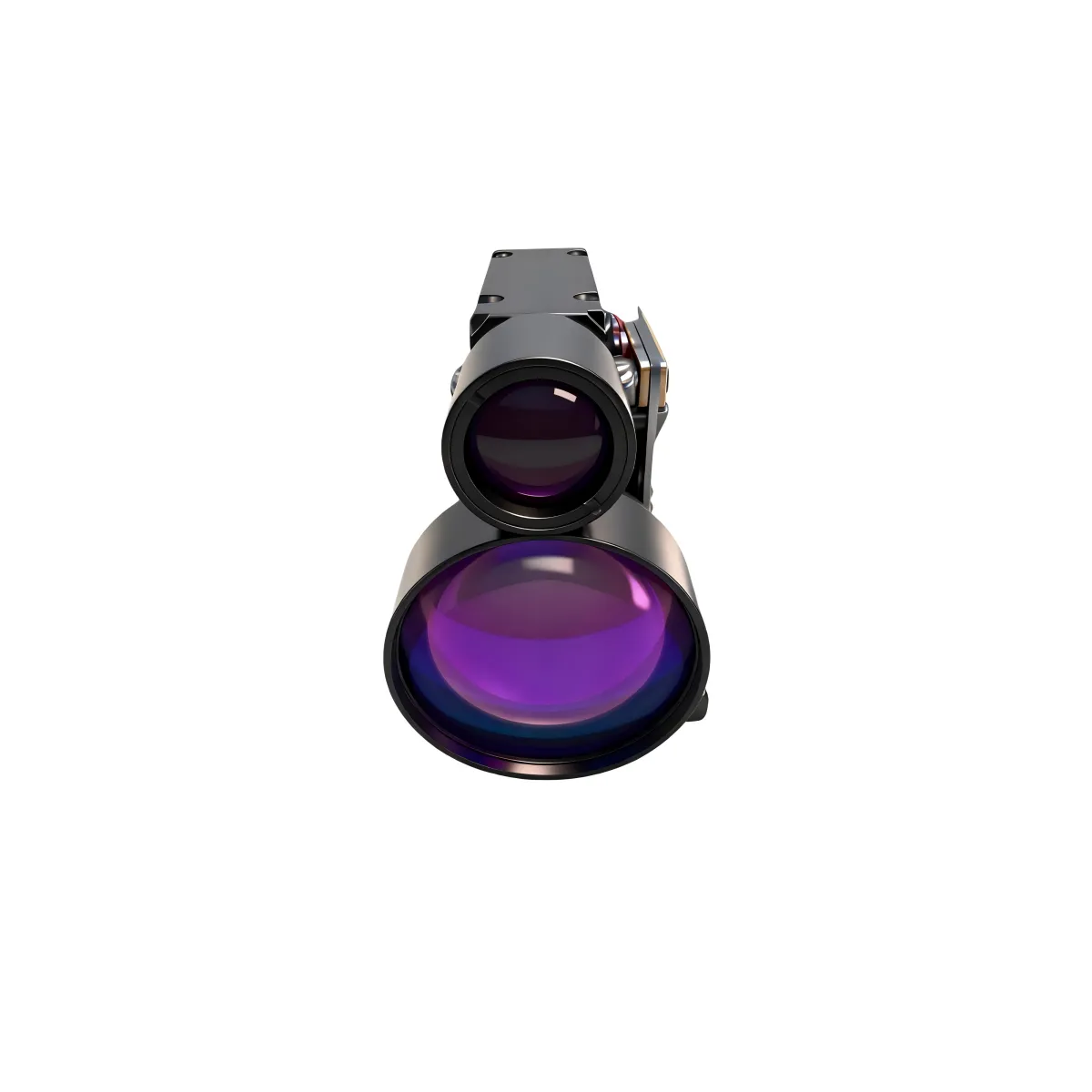
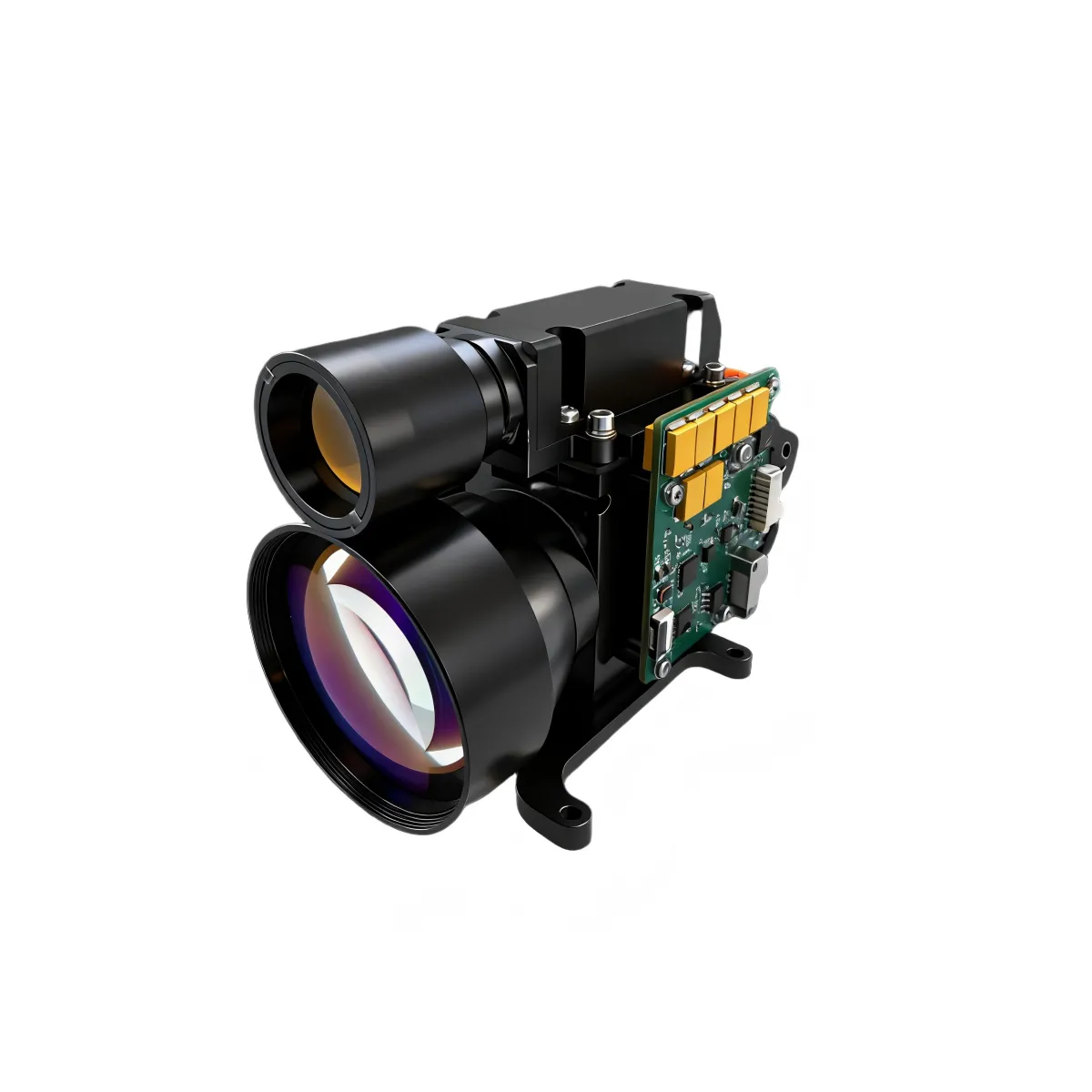
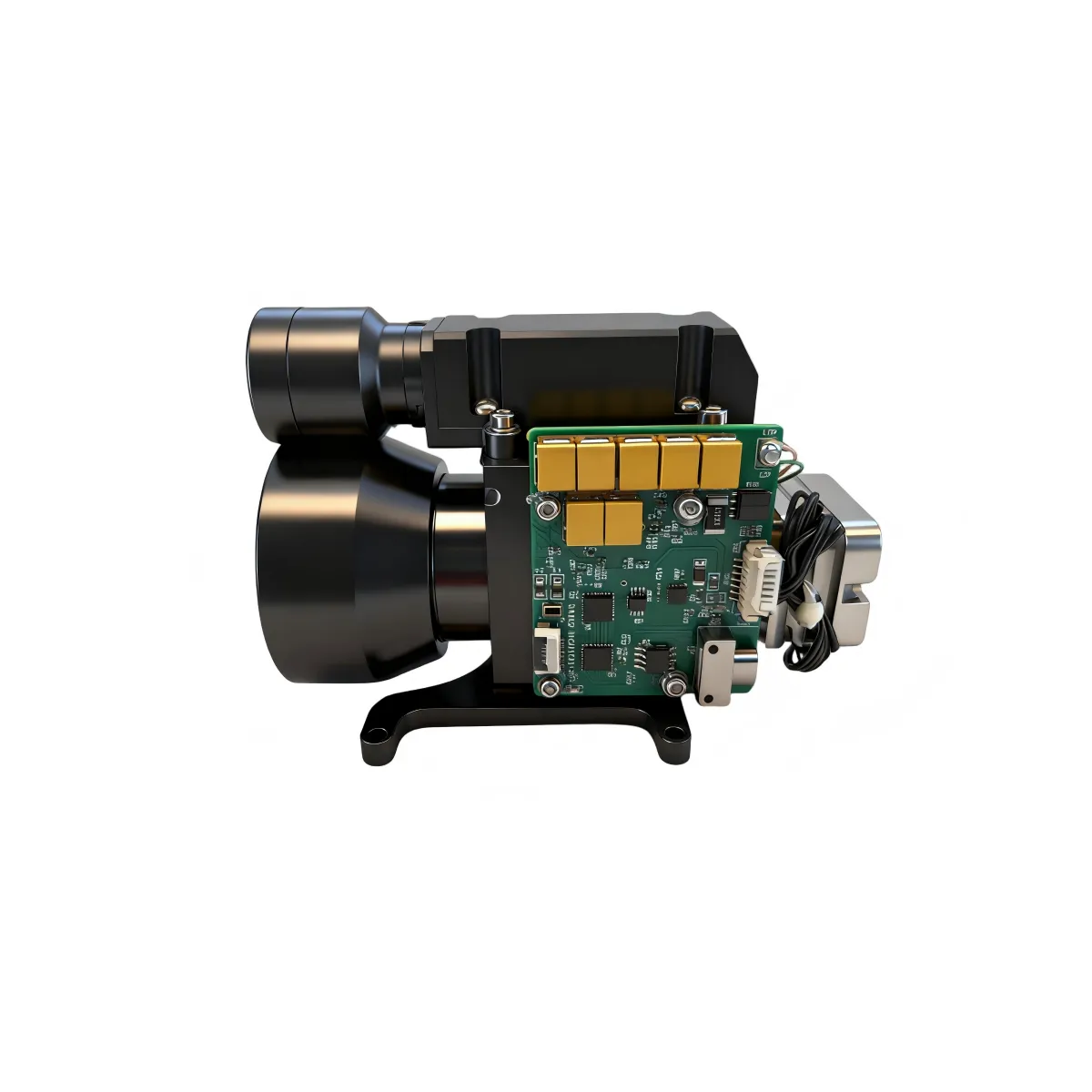
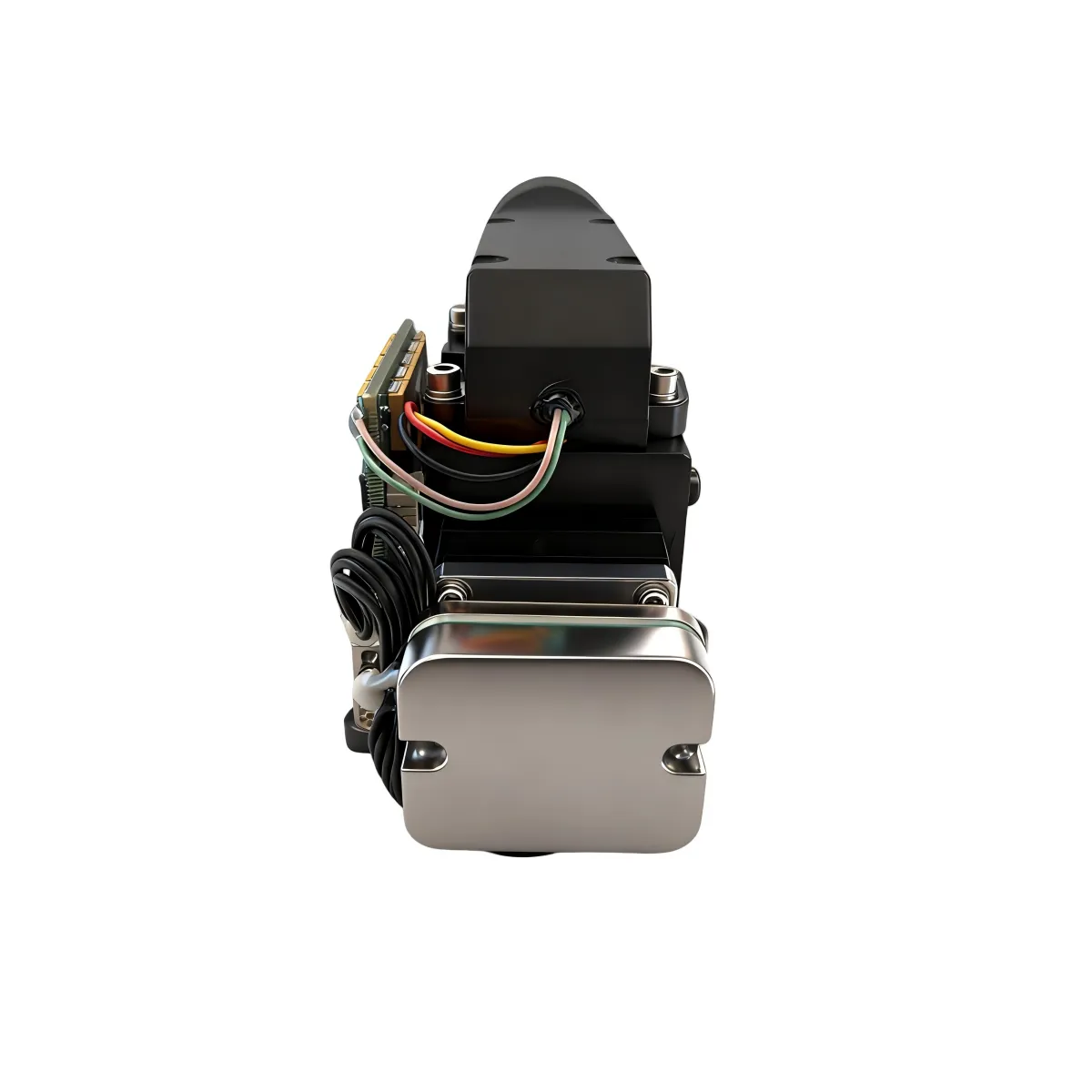
The LRF1221C-02 laser rangefinder module utilizes 1535nm eye-safe laser (Class 1 IEC 60825-1) with an uncased design, lightweight (≤285g), and energy efficiency (standby power ≤1.2W). This product is suitable for long-distance differential ranging, and the minimum ranging distance should not be less than 50m.
TECHNICAL SPECIFICATIONS
| Project | Performance Indicators |
| Model | LRF1221C |
| Laser Wavelength | 1.54μm±0.02μm |
| Eye- safety | Class Ⅰ |
| Divergence Angle | ≤0.3 mrad |
| Laser Energy | ≥300 μJ |
| Launch Lens Diameter | Φ12 mm |
| Receiver Lens Diameter | Φ40 mm |
| Measuring Range
(Reflectance 30%; visibility ≥15km.) |
4m × 6m Objective ≥12 km |
| Minimum Range | ≤50 m |
| Ranging Frequency | 0.5Hz ~10Hz |
| Communication interface | RS422 |
| Ranging Accuracy | ±2 m |
| Range Resolution | ≤0.1 m |
| Precision Rate | ≥98% |
| False Alarm Rate | ≤1% |
| Pin-in-lead package model | J30J |
| Supply Voltage | DC12 V |
| Standby power consumption | ≤1.2W |
| Average power consumption | ≤2 W |
| Peak Power Consumption | ≤3W@10Hz |
| Weight | ≤275g |
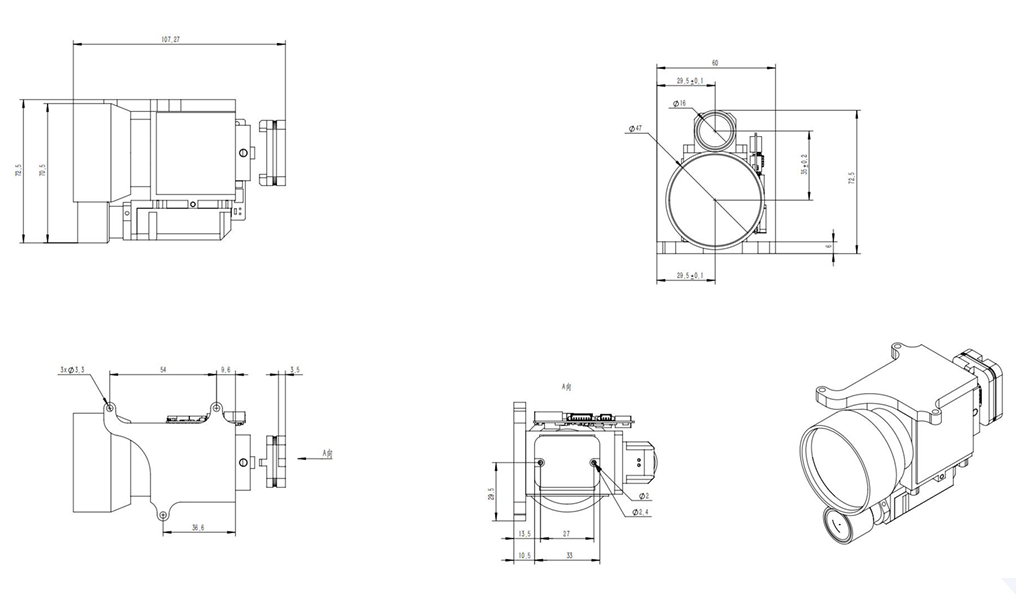
| Dimension (L×W×H) | 107×62×72mm |
| Operating Temperature | -40~+70 ℃ |
| Storage Temperature | -55~+75 ℃ |
| Impact Resistance | Meet the MIL-STD-810G testing standard |
| Vibration Resistance | Meet the MIL-STD-810G testing standard |
OUTLINE DIMENSION(mm)
PIN INTERFACE
Electrical connector model: J30J; The corresponding plug and cable shall be provided by Party B. The detailed definition of the electrical interface is shown in the following table:
Interface Definition
| Pin | Definition | Function | Remarks |
| 1 | GND | Serial Port Ground | |
| 2 | GND | 12V Input Negative | |
| 3 | GND | 12V Input Negative | |
| 4 | VCC 5V | 12V Input Positive | |
| 5 | VCC 5V | 12V Input Positive | |
| 6 | RS422 RX+ | Serial Port Receive + | From the upper computer to the rangefinder |
| 7 | RS422 RX- | Serial Port Receive - | From the upper computer to the rangefinder |
| 8 | RS422 TX- | Serial Port Transmit - | From the rangefinder to the upper computer |
| 9 | RS422 TX+ | Serial Port Transmit + | From the rangefinder to the upper computer |
APPLICATION NOTES
With a Φ40 mm receiver behind a Φ12 mm launch lens, the LRF1221C combines ≥300 μJ at 1.54 μm ±0.02 μm with ≤0.3 mrad divergence in a Class Ⅰ eye-safe build, and is quoted at ≥12 km on a 4 m × 6 m objective of 30 % reflectance with visibility ≥15 km. Accuracy is ±2 m with ≤0.1 m resolution, ≥98 % precision rate and ≤1 % false alarm rate across 0.5 Hz to 10 Hz, and the minimum range is ≤50 m, so it is typically used where targets are large, cooperative and distant rather than close and small. The uncased construction, 107 × 62 × 72 mm envelope and weight quoted as ≤275 g in the specification table permit direct integration into an existing optical bench or gimbal front end, while the RS422 differential link on a J30J connector is suited to longer harness runs in airborne and vehicle installations. Standby power ≤1.2 W, average ≤2 W and peak ≤3 W at 10 Hz, with −40 °C to +70 °C operation and MIL-STD-810G impact and vibration compliance, support duty-cycled long-range observation.
SELECTION GUIDANCE
Choose this module where the acceptance target is a large object such as a 4 m × 6 m panel or a vehicle rather than a NATO 2.3 m × 2.3 m panel, where the host already routes differential RS422, and where the optical bench can take an uncased assembly whose mating connector and cable are supplied by the integrator. Where the acceptance basis is the NATO panel at 30 % reflectance and ≥12 km visibility, or a fully enclosed transceiver-lens unit is preferred, the LRF1222C in the same group is the closer match. Where 10 km, 8 km or 6 km is sufficient, the LRF1017C, LRF0815C, LRF0816C and LRF0612C families offer lower mass, wider supply tolerance and TTL-level interfaces. At acceptance, verify wavelength tolerance and Class Ⅰ marking, energy ≥300 μJ, divergence ≤0.3 mrad, both aperture diameters, minimum range, accuracy and resolution on the agreed target, precision and false alarm rates over the full repetition band, standby, average and peak current draw, and the shock and vibration test reports. Check that the frame and heat path are provided for, since the module is delivered without a housing.
FREQUENTLY ASKED QUESTIONS
What is the maximum range of the LRF1221C?
It reaches ≥12 km on a 4m × 6m objective, measured at 30% reflectance with visibility ≥15 km.
Which communication interface does the LRF1221C use?
It communicates over RS422, using a J30J electrical connector on the module.
What are the ranging accuracy and minimum range?
Ranging accuracy is ±2 m with a range resolution of ≤0.1 m, and the minimum range is ≤50 m.
What is the power consumption of the LRF1221C?
It is powered from DC 12 V with standby ≤1.2 W, average ≤2 W and peak ≤3W@10Hz.
What are the weight and dimensions?
The module weighs ≤275 g and measures 107×62×72mm.
ORDERING INFORMATION
Is there a minimum order quantity?
There is no minimum order quantity. Single units and evaluation samples are accepted.
What is the sample lead time?
Samples are shipped within 1 week after order confirmation.
What is the batch production lead time?
Batch production is delivered within 1 month after order confirmation.
RELATED TECHNICAL GUIDES
Further ERDI Laser engineering references on 1535 nm eye-safe laser ranging modules and TOF sensors:
- Applications of 1535nm Laser Ranging Modules
- Enabling High-Performance Drones: Application of ERDI Laser 1535nm Laser Ranging Module
- 1535nm vs 1570nm Laser Ranging Module: Core Differences, Performance & Application Selection
- Laser Rangefinder Module Platforms
- Laser Rangefinder Module Integration Checklist
- How to Specify a Custom Laser Rangefinder Module: OEM Integration Guide
- Laser Ranging, Designation and OEM Integration FAQs