

1570nm Tactical Laser Rangefinder 20km LRF20C01ES
Need pricing or a tailored specification? Tell us your application — wavelength, range, platform and interface — and our engineers will reply within 24 hours with a proposal.
DESCRIPTION
The LRF20C01ES is a 1570nm tactical laser rangefinder sensor that merges optical, mechanical and electronic subsystems into one integrated unit.
Under standard visibility, it delivers effective ranging performance: minimum 20 km detection range for large targets with reflectivity ≥20%, and at least 10 km for a 2.3m × 2.3m target with identical reflectivity.
Boasting compact dimensions, lightweight build, outstanding reliability and extended service life, the module supports high-accuracy distance detection for remote targets.
It can be flexibly embedded into portable observation equipment, vehicle-borne and airborne optoelectronic platforms.
TECHNICAL SPECIFICATIONS
| Eye safety/level | Class1/1M |
| Laser Wavelength | 1570nm |
| Ranging Capability |
≥20km (under standard visibility, large target, reflectivity ≥20%) ≥10km (under standard visibility, 2.3m*2.3m target, reflectivity ≥20%) |
| Minimum Ranging Distance | 50m |
| Ranging Accuracy | ≤1m(RMS) |
| Ranging Frequency | 1~20Hz |
| Accuracy | ≥98% |
| Multi-target detection | ≥1. lf more targets are needed, the communication protocol should be customized. |
| Divergence Angle | ≤0.7mrad |
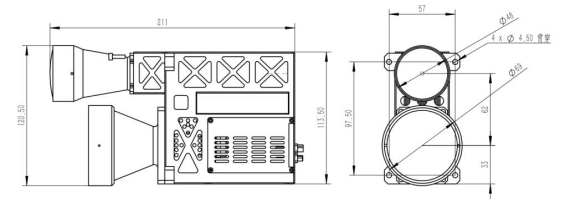
| Dimensions (Length * Width * Height) | ≤219mmx69mmx121mm |
| Weight | ≤1400g |
| Power Supply | 28VDC+10% |
| Power Consumption | Average power consumption ≤30W |
| Communication Interface | RS422 |
| Operating Temperature | -40℃~+60℃ |
| Storage Temperature | -55℃℃~+70℃ |
| Vibration and Shock | Meeting the relevant requirements of GJB150.16A.2009 |
OUTLINE DIMENSION(mm)
ELECTRICAL INTERFACE
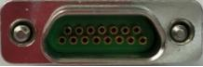
The upper computer and this rangefinder are connected through an aviation connector, which is an electrical interface.
1. Power supply interface: DC26V to DC30V (28VDC recommended); average power consumption ≤30W, peak power ≤250W;
2. Communication interface: RS422.
Table 1 Electrical interface
|
Electrical Interface Diagram |
 |
|
|
Pin |
interface definition |
note |
|
1~4 |
DC Power Supply |
+28V DC |
|
5~8 |
DC Power Supply Ground |
+28V Ground |
|
9 |
Serial Port T+ (Transmission + from Laser Rangefinder to Platform) |
RS422 |
|
10 |
Serial Port R- (Reception - from Platform to Laser Rangefinder) |
|
|
11 |
Serial Port T- (Transmission - from Laser Rangefinder to Platform) |
|
|
12 |
Serial Port R+ (Reception + from Platform to Laser Rangefinder) |
|
|
13 |
RS422 Communication GND (Optional, can be left unconnected) |
|
|
14 |
SYN+ 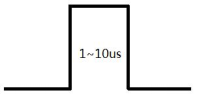 |
RS422 Differential External Time Synchronization |
|
15 |
SYN- 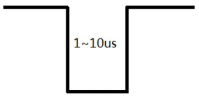 |
|
|
upper computer electrical interface |
J30J-15TJ with approx. 200 mm cable, supplied by the manufacturer |
|
APPLICATION NOTES
This 1570 nm eye-safe tactile ranging sensor reaches ≥20 km against large targets and ≥10 km against a 2.3 m × 2.3 m target at reflectivity ≥20% under standard visibility, with ≤1 m (RMS) accuracy and a 50 m minimum ranging distance. Two parameters make it the pick for space-constrained optical heads: divergence ≤0.7 mrad is the tightest published figure among the lighter 1570 nm modules, which keeps the beam footprint small at long stand-off, and an average consumption of ≤30 W on a 28 VDC ±10% supply leaves headroom on battery-backed or low-generation platforms.
A 1–20 Hz ranging frequency with an accuracy rate ≥98% and at least one detected target per shot is typically used where the distance reading feeds an observation workflow rather than a single-point measurement. The ≤219 mm × 69 mm × 121 mm body at ≤1400 g, the 69 mm width in particular, allows the module to be embedded alongside imaging optics in portable observation equipment, vehicle-borne platforms and airborne optoelectronic platforms — the installation classes described in the site's pod and long-range observation articles. GJB150.16A.2009 vibration and shock compliance with operation from −40 °C to +60 °C and storage from −55 °C to +70 °C covers field handling.
SELECTION GUIDANCE
Choose this module when the design constraint is beam quality plus power draw rather than raw reach: ≤0.7 mrad divergence and ≤30 W average consumption in a ≤1400 g, ≤219 × 69 × 121 mm package. If the application accepts a wider beam and needs a larger selection of ranging rates up to 25 Hz, or a longer maximum range in a larger body, another 1570 nm module in the family is the better match; if the head must be lighter still, a smaller module covers shorter distances at the same accuracy class. Applications requiring more than one target per shot need a customised communication protocol, so raise this at specification time.
Acceptance checks: Class 1/1M marking, ≥20 km on large targets and ≥10 km on a 2.3 m × 2.3 m target at reflectivity ≥20%, a 50 m minimum range, ≤1 m (RMS) accuracy, the 1–20 Hz band, ≥98% accuracy rate and ≤0.7 mrad divergence. Confirm ≥1 target per shot and whether the protocol carries multi-target data, the 28 VDC ±10% input against the J30J-15ZK pinout including SYN+/SYN−, average consumption ≤30 W, ≤1400 g mass, the measured outline against the host drawing, and the GJB150.16A.2009 compliance record.
FREQUENTLY ASKED QUESTIONS
What is the maximum ranging distance of the LRF20C01ES?
The module ranges ≥20 km on a large target with reflectivity ≥20% under standard visibility, and ≥10 km on a 2.3m*2.3m target with the same reflectivity.
How accurate is the LRF20C01ES and how fast can it measure?
Ranging accuracy is ≤1m (RMS) and the ranging frequency is 1~20Hz, with an accuracy of ≥98%.
Is the LRF20C01ES eye safe?
Yes. Its eye safety level is Class1/1M, and the laser wavelength is 1570nm.
What power supply and communication interface does the LRF20C01ES use?
It is powered by 28VDC+10% (DC26V to DC30V, 28VDC recommended) with average power consumption ≤30W, and it communicates over RS422.
What are the dimensions, weight and operating temperature of the LRF20C01ES?
The module measures ≤219mmx69mmx121mm, weighs ≤1400g, and operates from -40℃~+60℃.
ORDERING INFORMATION
Is there a minimum order quantity?
There is no minimum order quantity. Single units and evaluation samples are accepted.
What is the sample lead time?
Samples are shipped within 1 week after order confirmation.
What is the batch production lead time?
Batch production is delivered within 1 month after order confirmation.
RELATED TECHNICAL GUIDES
Further ERDI Laser engineering references on 1570 nm OPO eye-safe laser ranging modules:
- Comparison of 905nm, 1064nm and 1570nm ranging modules
- Analysis of the Core Differences between 1570nm and 1064nm Laser Ranging Modules
- Construction of the Optical Path System for a High-Stability 1570 nm OPO Laser Ranging Module
- Laser Rangefinder Module Platforms
- Laser Rangefinder Range Modeling
- How to Specify a Custom Laser Rangefinder Module: OEM Integration Guide
- Laser Ranging, Designation and OEM Integration FAQs

