

1570nm OPO Laser Rangefinder Module 50km LRF50D120ES
Need pricing or a tailored specification? Tell us your application — wavelength, range, platform and interface — and our engineers will reply within 24 hours with a proposal.
DESCRIPTION
Model LRF50D120ES is a 1570nm eye-safe laser rangefinder built around diode-pumped Optical Parametric Oscillator (OPO) technology.
This sophisticated optoelectronic device achieves tight integration of optical, mechanical and electronic assemblies.
It delivers superior ranging resolution. Under favourable standard visibility conditions, the effective detection range reaches no less than 15 km against a 1 m² aerial target with over 20% reflectivity. For large-size targets carrying identical reflectivity, the measurable distance extends to a minimum of 50 km.
TECHNICAL SPECIFICATIONS
|
Eye safety/level |
Class1/1M |
|
Laser Wavelength |
1570nm |
|
Ranging Capability |
Under better-than-standard visibility conditions, for a 1m2 flying target (reflectivity >20%), the operating range R is ≥15km; for a large target (reflectivity >20%), the operating range R is ≥50km. |
|
Minimum Ranging Distance |
100m |
|
Ranging Accuracy |
≤1m(RMS) |
|
Ranging Frequency |
1~25Hz;5Hz/10Hz/20Hz/25Hz/50Hz. |
|
Accuracy |
≥98% |
|
Multi-target detection |
≥1. If more targets are needed, the communication protocol should be customized. |
|
Trigger method |
It has two triggering modes: internal triggering and external triggering. When externally triggered, the time synchronization error between the laser and the external trigger pulse is no more than 10us. |
|
Divergence Angle |
≤1.2mrad |
|
Dimensions (Length * Width * Height) |
≤378mm×220mm×275mm |
|
Weight |
≤14kg |
|
Power Supply |
28VDC±10% |
|
Power Consumption |
Average power consumption ≤150W, Peak power consumption ≤300W |
|
Communication Interface |
RS422 |
|
Operating Temperature |
-40℃~+60℃ |
|
Storage Temperature |
-55℃~+70℃ |
|
Vibration and Shock |
Meeting the relevant requirements of GJB150.16A.2009 |
OUTLINE DIMENSION(mm)
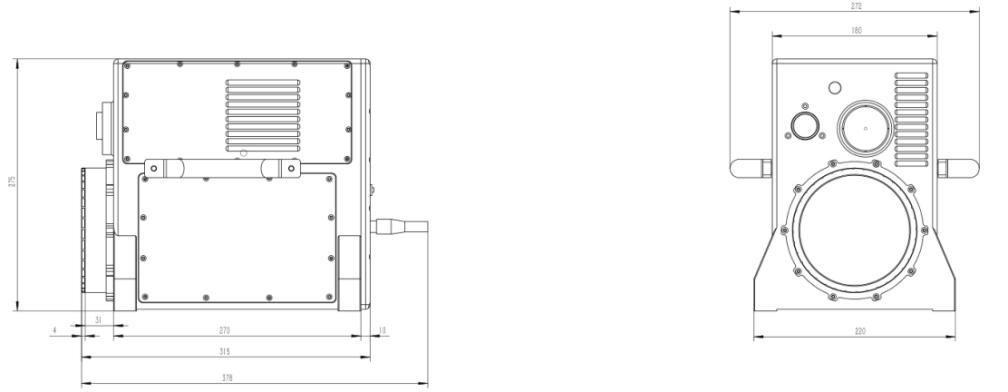
Mounting interface accepts customization
ELECTRICAL INTERFACE
The upper computer and this rangefinder are connected through an aviation connector, which is an electrical interface.
1. Power supply interface: DC26V to DC30V (28VDC recommended); average power consumption ≤30W, peak power ≤250W;
2. Communication interface: RS422.
Table 1 Electrical interface
| Electrical Interface Diagram |
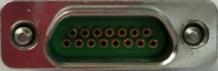 J30J-15ZK (Aerospace Electric) |
|
|
Pin |
interface definition |
note |
|
1~4 |
DC Power Supply |
+28V DC |
|
5~8 |
DC Power Supply Ground |
+28V Ground |
|
9 |
Serial Port T+ (Transmission + from Laser Rangefinder to Platform) |
RS422 |
|
10 |
Serial Port R- (Reception - from Platform to Laser Rangefinder) |
|
|
11 |
Serial Port T- (Transmission - from Laser Rangefinder to Platform) |
|
|
12 |
Serial Port R+ (Reception + from Platform to Laser Rangefinder) |
|
|
13 |
RS422 Communication GND (Optional, can be left unconnected) |
|
|
14 |
SYN+ 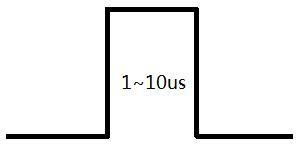 |
RS422 Differential External Time Synchronization |
|
15 |
SYN- 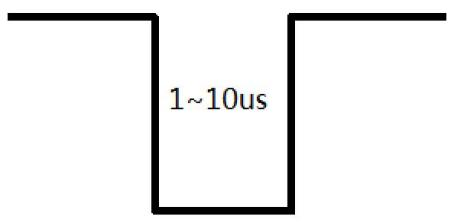 |
|
|
upper computer electrical interface |
J30J-15TJ with approx. 200 mm cable, supplied by the manufacturer |
|
APPLICATION NOTES
Class 1/1M eye safety at 1570 nm, combined with ≤1 m (RMS) ranging accuracy, is the pairing that positions this module for long-range work where measurement quality and operator safety cannot be traded against each other. The published ranges are conditional and worth reading precisely: ≥15 km against a 1 m² aerial target with reflectivity >20% and ≥50 km against large targets at the same reflectivity, both under better-than-standard visibility, with a 100 m minimum ranging distance and divergence ≤1.2 mrad. A 1–25 Hz ranging frequency, selectable at 5 Hz, 10 Hz, 20 Hz, 25 Hz and 50 Hz, with an accuracy rate ≥98% supports continuous tracking rather than spot measurement.
Two integration features decide where the unit is typically used. External triggering with a laser-to-external-pulse synchronisation error no greater than 10 µs allows the measurement to be tied to a gimbal position or an inertial timebase, which is what long-range observation, border monitoring and terrain survey workflows need before a distance becomes a coordinate. A ≤378 mm × 220 mm × 275 mm body at ≤14 kg, 28 VDC ±10% input, RS422 interface and compliance with GJB150.16A.2009 vibration and shock indicate a vehicle-mounted, shipborne or fixed-pedestal installation rather than a pod; operating range is −40 °C to +60 °C with −55 °C to +70 °C storage.
SELECTION GUIDANCE
Choose this model when ≥50 km large-target performance and ≤1 m (RMS) accuracy must both hold on a platform that can spare ≤14 kg and roughly 378 mm of length, and when the 50 Hz top rate is genuinely useful for scanning or fast-moving targets. If the payload volume is a pod or gimbal bay, a lighter 1570 nm module with a lower maximum range fits instead; if a 25 Hz ceiling is enough, the lower-range stablemate in the family saves mass and envelope. Applications dominated by small targets should read the 1 m² reflective-target figure rather than the large-target figure before committing.
Acceptance checks: Class 1/1M marking, ≥15 km on the 1 m² target and ≥50 km on large targets at reflectivity >20%, a 100 m minimum range, ≤1 m (RMS) accuracy, the 1–25 Hz band with the ordered 50 Hz option, divergence ≤1.2 mrad, and the ≤10 µs external-trigger synchronisation error. Confirm the ≥1 multi-target capability and whether the communication protocol has been customised for more, the 28 VDC ±10% input range against the J30J-15ZK pinout including the SYN+/SYN− pair, ≤14 kg mass, and the GJB150.16A.2009 vibration and shock report.
FREQUENTLY ASKED QUESTIONS
What is the maximum ranging distance of the LRF50D120ES?
For a large target (reflectivity >20%) the operating range R is ≥50km, and for a 1m2 flying target (reflectivity >20%) it is ≥15km.
What is the ranging accuracy of the LRF50D120ES?
Ranging accuracy is ≤1m(RMS), and the minimum ranging distance is 100m.
What is the beam divergence of the LRF50D120ES?
The divergence angle is ≤1.2mrad.
What are the dimensions and weight of the LRF50D120ES?
Dimensions (length × width × height) are ≤378mm×220mm×275mm and the weight is ≤14kg.
What is the operating temperature range of the LRF50D120ES?
Operating temperature is -40℃~+60℃, with a storage temperature range of -55℃~+70℃.
ORDERING INFORMATION
Is there a minimum order quantity?
There is no minimum order quantity. Single units and evaluation samples are accepted.
What is the sample lead time?
Samples are shipped within 1 week after order confirmation.
What is the batch production lead time?
Batch production is delivered within 1 month after order confirmation.
RELATED TECHNICAL GUIDES
Further ERDI Laser engineering references on 1570 nm OPO eye-safe laser ranging modules:
- Comparison of 905nm, 1064nm and 1570nm ranging modules
- Analysis of the Core Differences between 1570nm and 1064nm Laser Ranging Modules
- Construction of the Optical Path System for a High-Stability 1570 nm OPO Laser Ranging Module
- Laser Rangefinder Module Platforms
- Laser Rangefinder Range Modeling
- How to Specify a Custom Laser Rangefinder Module: OEM Integration Guide
- Laser Ranging, Designation and OEM Integration FAQs

