
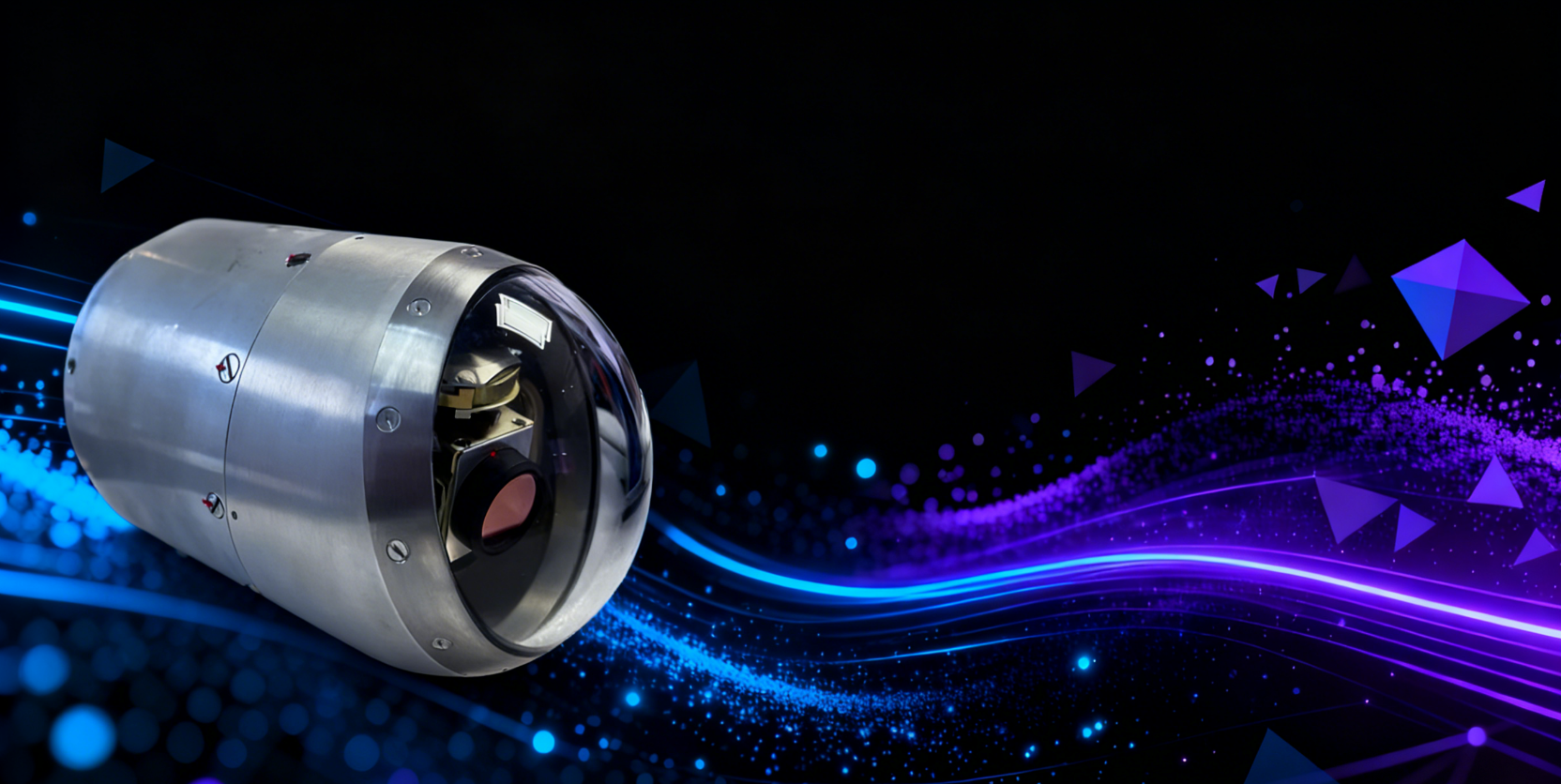
Leveraging advantages such as all-weather operation and high covertness, infrared imaging seekers have emerged as core components of precision-guided weapons; their target detection and recognition technologies directly determine guidance accuracy. In complex battlefield environments, challenges such as smoke obscuration, background clutter interference, and target maneuvering pose severe challenges to the real-time performance and reliability of detection and recognition processes.
The target detection phase requires overcoming the bottleneck of low signal-to-noise ratios. By employing adaptive threshold segmentation algorithms and multi-scale filtering techniques, the system effectively suppresses background interference—such as ground vegetation and cloud cover—while enhancing the extraction of target-specific infrared radiation features. Furthermore, by combining inter-frame differencing with background modeling, the system rapidly isolates suspected target regions, thereby boosting target acquisition efficiency in dynamic scenarios.
The recognition phase centers on feature matching and intelligent classification, integrating traditional features—such as shape and grayscale distribution—with deep learning features to construct multi-dimensional feature vectors. By introducing lightweight convolutional neural network models, the system simplifies network architecture to accommodate the computational constraints of airborne platforms while maintaining recognition accuracy, thereby enabling the rapid classification and identification of typical targets such as tanks and combat aircraft. Concurrently, through anti-interference training and robustness optimization, the system enhances the seeker's recognition stability within complex electromagnetic environments.
Future development directions should focus on miniaturization, intelligentization, and multi-modal fusion. This entails optimizing optical system designs to improve imaging quality, and integrating edge computing technologies to further reduce algorithmic latency. Ultimately, these efforts aim to drive the deep application of infrared imaging seekers in the field of high-precision guidance, providing critical technical support for precision strikes in modern warfare.