

ERDI Laser recently officially launched its next-generation LiDAR product. Leveraging its combined advantages of miniaturization, cost control, high-end performance, and robust interference resistance, it provides high-quality solutions for autonomous driving, service robotics, and other fields.
Key takeaways
- ERDI Laser has formally introduced a next-generation LiDAR product for intelligent perception applications.
- The design is presented as a combination of small size, controlled cost, high-end performance and strong resistance to interference.
- The markets named by the company are autonomous driving, service robotics and other perception-heavy fields.
- Published performance figures are a measurement error of ±2cm and a 20Hz scanning frame rate.
- The company positions the product as a resolution to the industry trade-off between performance and cost.
- Further expansion is planned into intelligent driving and intelligent logistics.
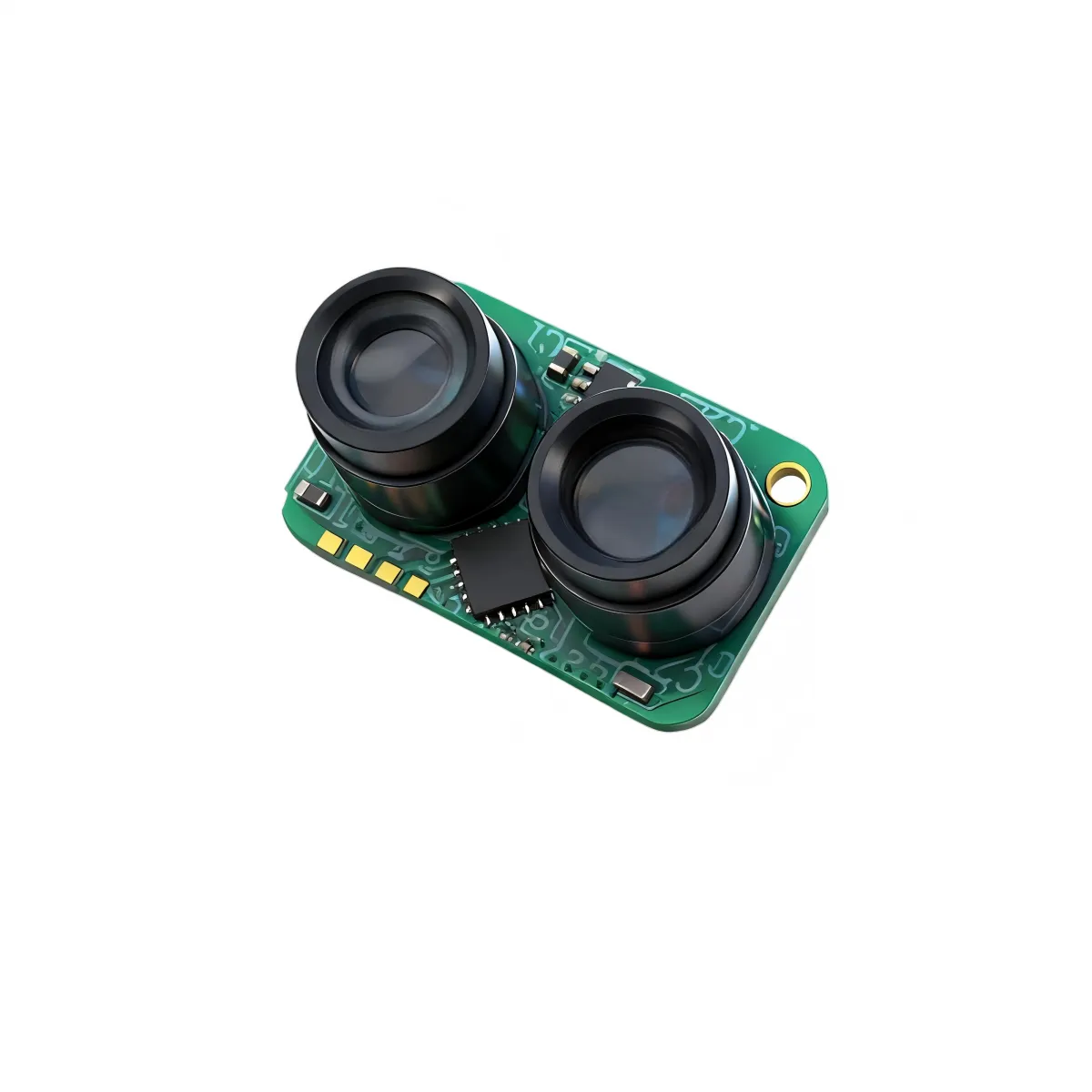

Next-Generation LiDAR Product Launch Overview
ERDI Laser recently launched its next-generation LiDAR product. This product integrates miniaturization, cost control, high-end performance, and strong anti-interference capabilities, providing high-quality solutions for autonomous driving, service robots, and other fields.
Measurement Accuracy And Scanning Performance
In terms of performance, our product achieves a high-precision measurement error of ±2cm. Combined with a high frame rate of 20Hz scanning, it can accurately capture details of dynamic targets. Its anti-interference capability is particularly outstanding, maintaining stable operation even in various radar interference environments such as rain and fog.
Balancing Performance And Cost For New Markets
“This product solves the industry’s pain point of balancing performance and cost,” said the R&D Director of ERDI Laser. To achieve strong stability, we will also expand into scenarios such as intelligent driving and intelligent logistics in the future.
What the new LiDAR is positioned for
The launch is framed around four attributes rather than a single headline figure. Miniaturization addresses the constraint integrators meet first: a sensor has to fit inside a vehicle roofline, a robot chassis or a service unit without dictating the mechanical design around it. Cost control speaks to volume deployment, where a perception layer only becomes viable once the platform can be built at scale. High-end performance and interference resistance cover the part of the problem that customers cannot engineer around themselves, because weather and competing signals are outside their control.
The application list follows from that positioning. Autonomous driving and service robotics both need dense geometric measurement of the surroundings in real time, which is what the published ±2cm measurement error and 20Hz scanning frame rate describe: enough detail to resolve the shape of a moving object, and enough refresh to keep tracking it. The company has also said that intelligent driving and intelligent logistics are the next scenarios it intends to enter, which makes the launch a platform step rather than a single-purpose instrument.
How this generation differs from established sensing options
Each perception technology answers a different question. A camera records appearance but has to infer depth from it, which becomes fragile exactly when lighting does. Radar measures range and velocity well and keeps working through weather, but returns coarser angular detail, which limits object classification. LiDAR contributes direct range measurements across a dense set of directions, which is why it has become the reference for obstacle geometry, and also why its historical weaknesses were size and price rather than capability.
The claim ERDI Laser makes sits on those two weaknesses. By combining miniaturization with cost control while keeping the anti-interference behaviour, the product is aimed at the segment where LiDAR was previously judged too expensive or too bulky to include. The interference point deserves separate attention: rain, fog and radar interference are where the product is said to remain stable, and stability of output matters more than peak range in a system that must decide, every frame, whether an object is present.
Frequently asked questions
What has ERDI Laser launched?
A next-generation LiDAR product aimed at intelligent perception applications.
Which fields is it intended for?
Autonomous driving, service robotics and other fields that depend on reliable perception.
What performance does the company publish?
A measurement error of ±2cm together with a 20Hz scanning frame rate.
Does interference affect it?
The company states that it maintains stable operation in radar interference environments such as rain and fog.
RELATED READING
- ERDI Laser Debuts at CIOE Exhibition
- Anti-Jamming Systems for Laser Seekers
- Laser Rangefinder Module Platforms
- ERDI News and Solutions
RECOMMENDED PRODUCTS
Hardware configurations from the ERDI Laser catalogue that match the topics in this article: